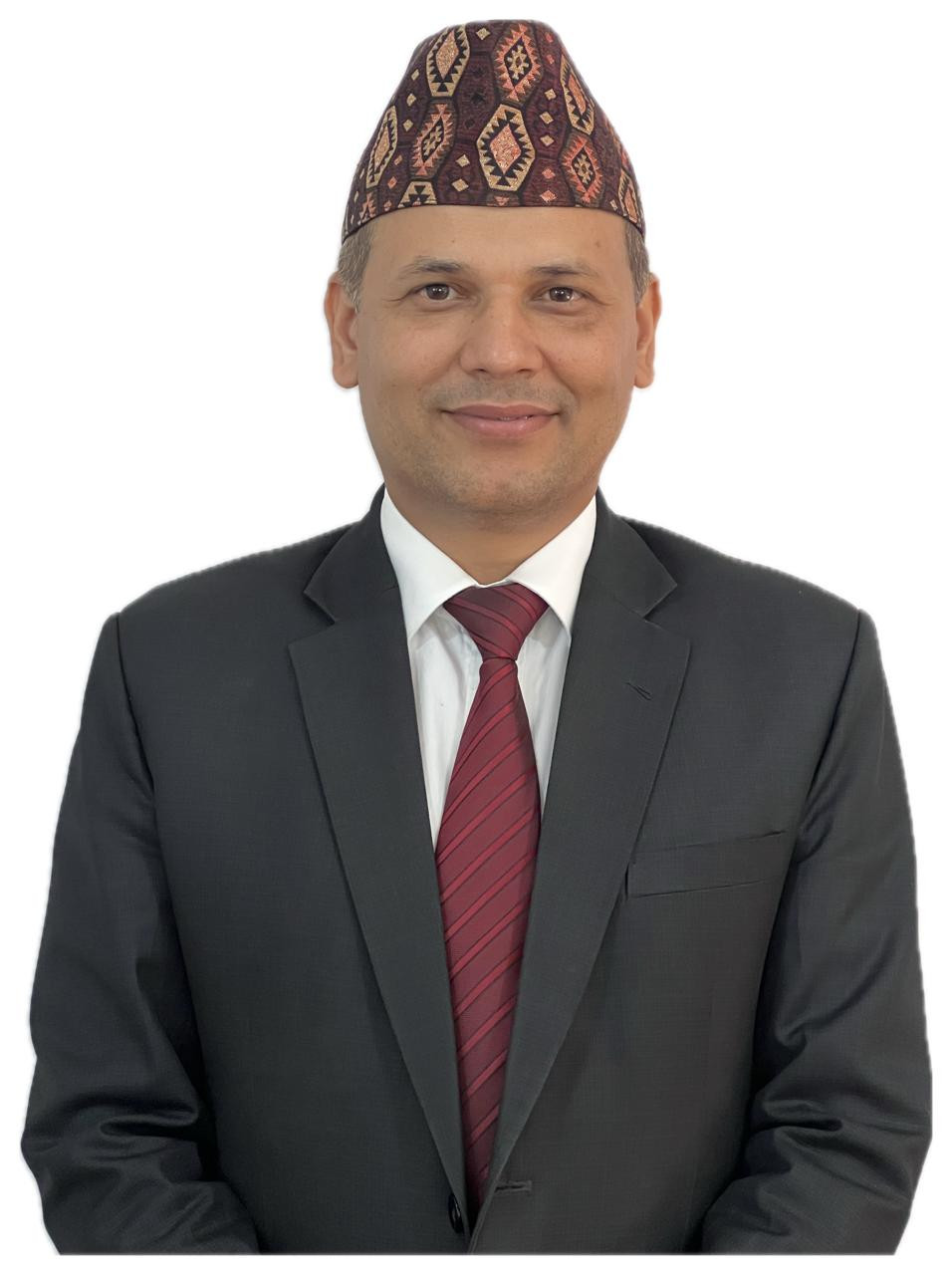
Dear Colleagues,
It is my pleasure to serve as the Chairman of the Accounting Standards Board at a time when the quality, credibility, and relevance of financial reporting have become increasingly important to Nepal’s economic and financial development. A sound financial reporting framework is essential for promoting transparency and accountability, strengthening stakeholder confidence, supporting informed economic decision-making, and facilitating sustainable growth.
In an increasingly interconnected global economy, Nepal’s financial reporting practices must continue to evolve in response to international developments while remaining responsive to the country’s own economic, regulatory, and institutional environment. The ASB Nepal has an important role in this process by developing and maintaining high-quality accounting standards that promote consistency, comparability, transparency, and reliability in financial reporting.
The Accounting Standards Board (ASB Nepal or The Board) was formed by the Government of Nepal on July 08, 2002 (2059 Ashad 24), through an amendment to the Nepal Chartered Accountants Act, 1997 (First Amendment, 2002), which incorporated provisions for its establishment and operation. The ASB Nepal was formed with the responsibility of formulating accounting standards for the preparation and presentation of financial statements in Nepal. The Board is primarily responsible for setting accounting standards for business enterprises in line with the International Financial Reporting Standards (IFRSs).
Accounting Standards provide a framework of principles and procedures covering various aspects of accounting transactions, including their recognition, measurement, treatment, and disclosures in financial statements. They provide a consistent basis for the preparation and presentation of financial information and contribute to enhancing transparency, consistency, comparability, and reliability in financial reporting.
With a view to achieving these objectives internationally, the International Accounting Standards Board (IASB) has undertaken continuous efforts toward the harmonization of accounting standards and practices across jurisdictions. These efforts seek to promote a common understanding of financial statements among users and stakeholders worldwide.
In the context of globalization, Nepal cannot remain isolated from developments in international financial reporting. Accordingly, the ASB Nepal has been working toward developing and maintaining Nepal’s financial reporting framework in line with international accounting standards while considering the economic, legal, regulatory, and institutional environment of Nepal.
The ASB Nepal, formed under the provisions of the Nepal Chartered Accountants Act, 1997, has so far developed and issued the following standards for pronouncement by the Institute of Chartered Accountants of Nepal (ICAN):
The ASB Nepal has also published Application Guidance Notes for various accounting standards based on NFRS 2013 and prepared Model Financial Statements for general-purpose financial reporting in accordance with NFRS 2013.
Likewise, at the request of the Financial Comptroller General’s Office (FCGO), the ASB Nepal revised the Nepal Public Sector Accounting Standards (NPSAS) 2007 for the public sector in line with IPSAS 2017 Cash Basis. The revised Nepal Public Sector Accounting Standards (NPSAS) was approved by the Government of Nepal on 2079 Mangsir 20 (December 06, 2022).
In response to the global transformation in corporate reporting and the growing importance of Environmental, Social, and Governance (ESG) reporting, the ASB Nepal has expanded its focus beyond traditional financial accounting to encompass comprehensive sustainability reporting. To align with the global baseline established by the International Sustainability Standards Board (ISSB), the Board has developed & published the Exposure Drafts of NFRS S1: General Requirements for Disclosure of Sustainability-related Financial Information and NFRS S2 Climate-related Disclosures. These inaugural sustainability reporting standards establish a standardized framework for Nepalese entities to identify, measure, and disclose sustainability- and climate-related risks and opportunities. By integrating these non-financial disclosures alongside financial statements, ASB Nepal aims to enhance investor confidence, support risk management in climate-vulnerable sectors, facilitate access to sustainable global capital, and contribute directly to Nepal’s long-term economic resilience and sustainable development goals.
As Nepal’s economy and financial markets continue to evolve, the role of the ASB Nepal is becoming increasingly important. The Board remains dedicated to enhancing the quality, comparability and trust of financial and sustainability reporting in Nepal, staying aligned with international benchmarks and collaborating closely with regulators, professional bodies, preparers, auditors, investors and other stakeholders.
I look forward to the continued support and cooperation of all stakeholders in advancing the quality and credibility of financial and sustainability reporting in Nepal.
Ramesh Kumar Dhital, FCA
Chairman
Accounting Standards Board, Nepal
Copyright © 2026 All Rights Reserved | Accounting Standards Board
This site has been visited
times.